
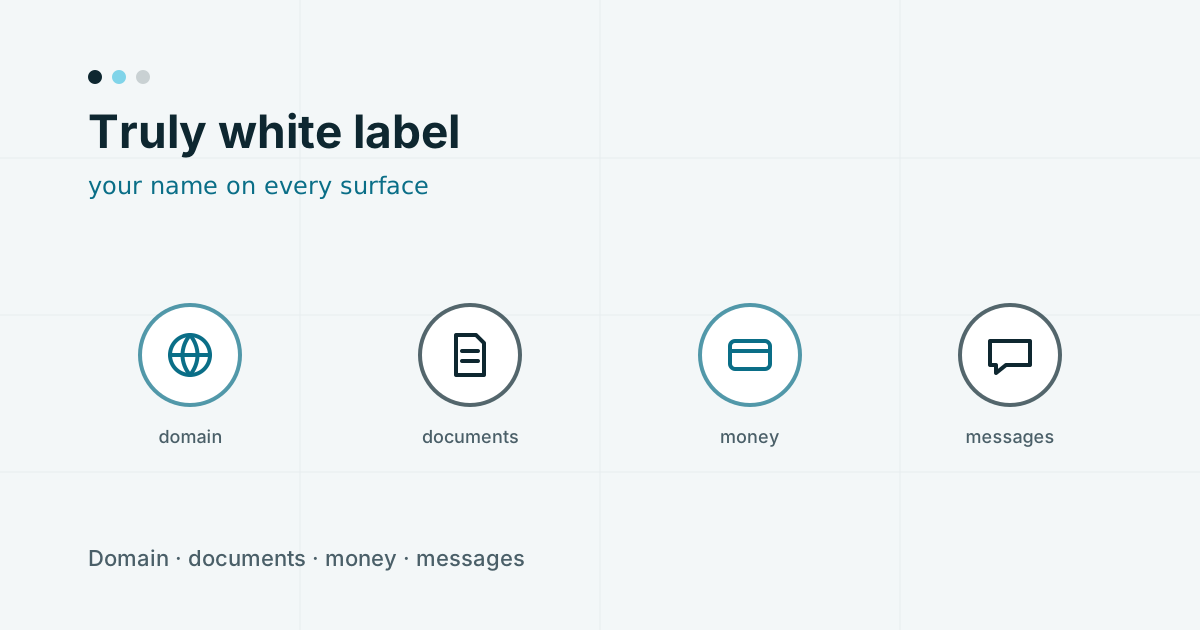
"White label" gets used loosely. For some vendors it means you can upload a logo and pick a colour. For an advisory firm, that is not enough, and the gap is not cosmetic.
Why it matters commercially
Consider what a client concludes when, halfway through paying you, the URL changes to a vendor's domain, or the agreement they sign has someone else's name in the footer. Some will not notice. Others will wonder whether you are a reseller, whether their money is going where they think, or whether the research is really yours.
For a business built on trust, every surface that shows someone else's name is a small leak in that trust. White label done properly is about plugging all of them.
There is a regulatory angle too. Your clients signed up with a SEBI-registered firm: yours. The agreement, the grievance route and the accountability all run to you. A client journey that keeps showing a different company's name blurs that line, and in a complaint, blurred lines become questions you have to answer. Keeping your identity consistent from the first page to the last invoice makes the relationship unambiguous for the client, for SCORES, and for anyone reviewing your files later.
A useful way to think about it: walk through every place a client touches your business, and ask whose name is on it?
1. The address bar
Start with the most visible thing. Your client portal should be served from your own domain or a
subdomain of it, such as portal.yourfirm.in.
Not acceptable:
vendor.com/yourfirmyourfirm.vendor.com- A redirect to the vendor's domain at login, checkout or signing
Also check what happens when a client opens a link in a new tab, or downloads a document and looks at the URL it came from. Internal links sometimes give away the underlying system even when the main page does not.
2. The documents
Documents outlast sessions. A client may open their agreement or an invoice years after signing. Every document should carry your firm's identity:
- Agreement and MITC: your firm's name, address, SEBI registration number and date, and your disclaimer.
- Invoices: your name, GSTIN, PAN, address, and your own invoice number series.
- Research reports: your letterhead, your registration details, your disclaimer, and your digital signature if you use one.
Ask a vendor to show you a real production invoice and a real signed agreement from an existing customer, with personal details redacted. Templates can be made to look right; production documents show what actually ships.
3. The money
Payments should run on your merchant account, using your own gateway credentials. The client's payment page should show your business name, and the money should settle to your bank account.
If a vendor collects payments into their own account and pays you out, two things are true: their name appears on the client's bank statement, and a third party is holding your clients' money. Neither is what you want.
4. The messages
Every message a client receives should come from you:
- WhatsApp from your own WhatsApp Business number, showing your business name.
- Email from your own domain, sent through your own mail server or provider.
- Telegram from your own bot and channels.
A shared vendor number or a noreply@vendor.com address undoes much of the work above.
5. The look and feel, and who controls it
Branding is not a one-time setup. You will change your logo, run a festive theme, adjust colours on the checkout. Ask:
- Can you change the logo, favicon, colours and theme yourself, from your console?
- Or does every change need a support ticket?
The answer tells you how much the platform is really yours day to day.
6. Your data, and whether you can leave
A brand that sits on top of someone else's system is only yours while you stay. The deeper test of white label is what happens if you leave.
Ask the vendor, before you sign:
- Can you export your full client list, subscriptions, payments and invoices, in a standard format such as CSV or Excel?
- Can you download every signed agreement and KYC document, organised by client, in one go?
- Is your research record (every call, revision and exit, with timestamps) exportable?
- Because your gateway, WhatsApp number and domain are yours, do they simply move with you?
If the answers are yes, the vendor is earning your business every month. If the answers are vague, your brand is on the outside, but the vendor holds the keys.
7. Inside the product, not just on the login page
Plenty of platforms brand the login screen and the dashboard home, then drop into generic screens once a client clicks deeper. Walk through the parts clients use less often but care about more:
- The plan and renewal screen
- The payment history and invoice downloads
- The documents page with their signed agreement
- Error pages, "page not found", and expired-link messages
- The emails for password reset, receipts and renewal reminders
Each of these is a moment when a client is paying attention, often because something has gone slightly wrong. It is exactly where a stray vendor logo does the most damage.
The legitimate exceptions
A strict white label has a small number of honest exceptions, and a good vendor will name them up front:
- Disclosures. Where a document must name a party the client is authorising (for example, a service provider that processes their data or signature), it has to name them. That is a legal disclosure, not branding, and hiding it would be wrong.
- Regulated sender IDs. In India, commercial SMS must come from a registered sender ID. If a platform sends backup SMS (for one-time codes, say) through its own registered ID, that ID will appear. Ask whether you can register and use your own.
The point is not that there must be zero exceptions. It is that you should know every one of them before you sign.
Seven questions for the vendor
- Whose domain does the client portal run on, at every step including checkout and signing?
- Can I see a real invoice and a real signed agreement?
- Whose merchant account receives client payments?
- Which number and email address do client messages come from?
- What does a client see if they open a document link in a new tab?
- Where, exactly, does your name still appear, and why?
- Can I change the logo, theme and checkout appearance myself?
Get the answer to number 6 in writing.
White labelling does not change your regulatory obligations. Your firm remains responsible for its research, disclosures and client relationships under SEBI regulations.
How Mintants handles this
The Mintants white-label platform runs on your own domain with your logo and brand. Agreements, invoices and messages carry your firm's name and SEBI registration; payments go to your own gateway account, with GST invoices in your series; and messages go out from your own WhatsApp Business number, Telegram and email. Clients experience your practice, not ours.
Book a walkthrough and ask us all seven questions, or see pricing.